BBC Broadcasting House ~ take a tour of Auntie’s house!

Tags

,

BBC Broadcasting House exterior 4Whether you refer to the BBC as ‘Auntie’ or the ‘Beeb’, the BBC is certainly part of our everyday lives.  One unique opportunity available in London is to take a tour of the multimedia broadcasting centre – Broadcasting House – located right in the heart of the West End.  This complex combines the older art deco building with the newer attached buildings.  While the Television Centre stopped its tours in February 2013, tours of the Broadcasting House were only made available to the public as of April 2013.  With the Queen officially ‘opening’ Broadcasting House on 7 June 2013, if the media world fascinates you or you just want to see how the show is put on, then now is a great time to visit while it’s still fresh and off the tourist radar.

BBC Broadcasting House exterior 3

Broadcasting House:   Originally built in 1932 when the BBC was only 10 years old, Broadcasting House was the first ever purpose-built broadcast centre in the UK. After decades of use, major changes recently took place here.  The original old Broadcasting House was joined with the neighbouring New Broadcasting House and the John Peel Wing to create one building that houses BBC’s Television, Radio, News and Online services along with over 6,000 staff.  The newsroom alone occupies all of the basement and ground floors, providing over 400 workspaces for 3000 journalists.  In March 2012, the first programming broadcast live from this new building.  In addition to tours, BBC shows can also be watched onsite in the Radio Theatre.

broadcasting house interior 3

Tours:  Tours are generally available 7 days per week, and can be booked up to 3 months in advance.  The first tour starts at 10am, and the last tour generally departs at 3:45pm.  Tours last about 90 minutes.  Use their online booking service to select the date and time you want.  Tours are only available for those age 9+.  Tickets are £13.50 (age 16+), £11.25 (age 60+), and £9 (age 9-15).  Family tickets and student discounts are available.

BBC Newsroom

Most tours begin in the Media Cafe.  Tour guides use iPads to share historical images while taking you on a tour of various parts of the combined building.  You may also see into various television and radio studios (note: tours can/will vary based on what’s going on at the time).  Generally though you will also be provided with an opportunity to role play a segment of a radio show, a news report and a weather report on a set.  The Radio Theatre will likely be visited (if not in use) – this is where Radio 2 concerts and shows like ‘The News Quiz’, ‘The Now Show’ and ‘Just a Minute’ are recorded.  You will also be able to view into the newsroom – the largest in Europe. It is likely that you will be able to see both on-air news and weather forecasts taking place.

BBC Media Cafe

Media Cafe:  A large, glass-fronted Media Café and viewing gallery overhanging the newsroom is open to the general public before or after the tour.  Drinks and light snacks are served.

BBC BH weather station

Located at: BBC Broadcasting House, Portland Place, London W1A 1AA

Closest Tube:  Oxford Circus.

Picture Credit:  Internal pictures sourced from:  bbc.co.uk/broadcastinghouse

The Old Truman Brewery Complex, Brick Lane.

Tags

, , , ,

truman brewery complex (1)The Old Truman Brewery complex covers 10+ acres on both sides of Brick Lane.  The area and this complex have been regenerating over the last 15 years making it a destination in its own right today.  With a blend of retail, leisure and events spaces, along with a wonderful collection of street art from some of the world’s best known artists, the Old Truman Brewery site is worth a visit.

Source: Trumanbrewery.org

Source: Trumanbrewery.org

History:  There was a brewhouse here as early as 1666, but in 1724 the Black Eagle Brewery was built – becoming the largest in London and the 2nd biggest in Britain.  By the early 19th Century this brewery was producing over 200,000 barrels of Porter a year.  By the end of the 19th Century, most production was shifting to Burton-upon-Trent for the water supply and quality.  But this London brewery kept going – though in decline.  Finally in 1988 it closed.  Its name today recognizes the family that started and built it in its early years.

truman brewery complex (2)

Events:  There are numerous events, openings and gallery exhibitions happening here – and they change all the time.  So for an up to date list be certain to check their website.  For example, at the time of writing, StolenSpace Gallery is exhibiting art by D*Face while ‘Free Range 2013′ – Europe’s largest graduate art and design show – is occurring throughout the complex.

upmarket food stall

Sunday (Up)Market:  Open Sundays from 10am onwards, this indoor market has over 140 stalls selling fashion, accessories, crafts, decorative items, music and food.  This market aims to be a platform for designer-makers to sell direct to their customers. The food area is very multi-cultural – with everything from Ethiopian coffee to Sushi to Moroccan food.

truman brewery complex (4)

Street Art:  While Brick Lane is known for its street art, trips into side streets and parking lots reward the explorer.  Art by Shepard Fairey and D*Face, among many others, is easy to find.

truman brewery complex (3)

Shopping & Other Activities:  There are numerous bars, clubs and restaurants – something for everyone.  Whether you are looking to dance til 1 am, or just eat out – you’ll find the choice here.  There is also a bowling alley here – All Star Lanes.  Shopping outlets tend to focus mostly on fashion and art.  Most shops and galleries are open from 11-7 daily (6 on Sunday), though a few open earlier, and a few are closed on Monday.

Located at:  91 Brick Lane, London, E1 6QL

Closest Tube:  Aldage East (or Shoreditch High Street / Overground)

Upminster Windmill ~ one of only nine surviving windmills in Greater London.

Tags

, ,

Upminster WindmillNot long ago much of what is now Greater London was working farmland.  While little remains to remind us of those days it is still surprising to see a windmill in London.  Today, only nine windmill structures survive in Greater London – of which the Upminster Windmill is one.  Now surrounded by housing, this mill warrants a visit as its sails can still operate, it is a rare smock design, and because it provides perspective and insight into Greater London’s farming roots.

Upminster Windmill has plenty of open days this summer (usually two weekends each month), and with the combined classic car show on 7th July, this is a great time to visit.  Admission is free though donations are requested.  For specific open dates and times see their website at: http://www.upminsterwindmill.co.uk/

Source: Friends of Upminster FB page

Source: Friends of Upminster FB page

The Windmill:  This Grade II listed building is considered one of the best remaining windmills in England built in the ‘smock’ style.  Smock mills are generally octagonal (a few are hexagonal) as opposed to the cylindrical look of ‘tower’ style mills.  This windmill is octagonal, on a brick base, with five levels inside.

upminster windmill cog

In January 2013 it received initial funding from the Heritage Lottery fund to begin the process of pursuing a full grant of £1.4 million that will allow for complete restoration as well as the building of an educational and training centre.  Visitors get to climb inside the windmill (stairs are steep!) and view the original workings and machinery.

upminster windmill stairs

There are some great vintage photos of the windmill on the Friends of Upminster Windmill FB page, and there is a nice video on YouTube of the windmill with sails turning: View Video

History: In 1803 a Mill, along with a bakery and various cottages were build at Bridge Farm in Upminster.  By 1812, steam engines had been installed to drive two mill stones.   While the mill is productive in its early years, the farm transfers hands numerous times due to debt and deaths.  By 1849, an auction described the mill as ”comprising a most substantial modern built Corn Mill, …, with capital steam engine … driving five pairs of stones, and substantial Engine House, Granaries and Storage for a large quantity of corn.  Stabling and other suitable Outbuildings, with a modern well-built detached comfortable Residence.  … 2 Millers Cottages and a pond full of water, together with a beautiful and productive meadow, containing 11 acres”.   In 1857 the windmill and farm was purchased by the Abraham family – still remembered by many who refer to this as the Abraham Windmill as their family continued to operate the mill until 1934.

By the early 20th Century government controls of corn during WW I along with the growth of large scale milling lend to the decline of the independent windmill.  In 1937 Essex County Council purchased the mill with the intent to develop the site.  With public persuasion, the mill was saved, but in the 1960s the outbuildings were razed.  In 1965 ownership transferred to Havering and in 1968 it was opened to the public. Since then continual restoration has occurred. 

Other Mills:  For related information, two other related posts should be viewed:  Brixton Windmill and Three Mills Island (a tidal mill).

Located at:  The Mill Field, St. Mary’s Lane. Upminster, RM14 2QL

Closest tube:  Upminster Bridge (District Line).  Head east from the Station along Upminster Road / St Mary’s Lane.  The windmill is less than 0.5 mile from the Station.  You will pass the Windmill Pub along the way is a drink / meal is wanted.


St. Mary the Virgin & the Mayflower Pub, Rotherhithe ~ forever linked to the settling of America.

Tags

, , , , ,

Mayflower stamp

Rotherhithe is a Saxon word meaning ‘landing place’ but one of its most famous moments was as a place of departure.  It was here in 1620 that the Mayflower departed from outside the Shippe Inn, beginning its journey to Plymouth and on to the New World.

Source: stmaryrotherhithe.org/

Source: stmaryrotherhithe.org/

Rotherhithe:  This area was a popular place for boats to dock and unload their goods.  One local boat, the Mayflower, was partly owned by Rotherhithe resident Christopher Jones who had moved here in 1611.  For years the Mayflower’s primary cargo was wine from Europe.  But in 1620 it was hired to transport religious separatists to the New World.  The Mayflower sailed from Rotherhithe with 65 passengers on its first leg of its journey to America.  Departing from in front of a public house, the Shippe (now renamed The Mayflower), its Captain was Christopher Jones (see below).

St Mary the Virgin churchSt. Mary the Virgin:  Just south of the Mayflower pub (Shippe Inn) is the church of St. Mary the Virgin.  There has been a church here since at least the 1100s.  The current building is from 1716 and was designed by John James – an associate of Sir Christopher Wren.  The church is linked to England’s maritime history in many ways, but its connection to the Mayflower and those who left for the New World, later to be known as Pilgrims, is its most significant.  The Captain of the Mayflower, Christopher Jones, was a parishioner here.  His children were baptised at St Mary’s and he is buried in the churchyard (he died in 1622 after returning from America with his ship). The exact site of Captain Jones’ burial is unknown though a memorial tablet can be found inside the church.

mayflower plaque

On the tower of the church is a blue plaque commemorating the sailing of the Mayflower.  For more information on the church visit: http://www.stmaryrotherhithe.org/

mayflower pub street side

The Mayflower Pub:  Originally known as the Shippe, this pub dates back to the 1550s.  It is claimed that Captain Jones docked the Mayflower at the Shippe Inn to avoid paying commercial dock fees.  The pub underwent various name changes over the years, but in 1957 it was restored and renamed to celebrate its connection to the Mayflower.  Still with its dock on the Thames in front, the building also used to be a riverfront Post Office and so in recognition of this it is claimed to be the only place in London that is licensed to sell both US and UK postage stamps.

Pilgrim statue

A short walk east of the pub brings you to Cumberland Wharf where a statue depicting a Pilgrim and an informational panel can be found.

Located at:  St.Marychurch Street, Rotherhithe, SE16 4JE

Closest rail:  Rotherhithe (Overground) or Canada Water

Docklands Sailing and Watersports Centre ~ windsurfing, sailing & kayaking in the heart of London!

Tags

, , , ,

Source: dswc.org

Source: dswc.org

As summer approaches, water based activities become more appealing.  Located in the Docklands, at the west end of Millwall outer dock is the Docklands Sailing and Watersports Centre.  Here members and non-members can learn how to sail, windsurf, or kayak without having to leave the city.  There are even dragon boat groups for those wanting to try that activity.  Non-members generally have full access on weekends year round, and during spring – autumn on Wednesday evenings (‘twilight’ sessions).

docklands sailing logo

History:  The centre opened in 1989, funded by the London Docklands Development Corporation and the Sports Council.  Its aim is to provide recreational water activities for all Londoners and visitors alike.

docklands sailing centre_1

Activities:  The main activities for most people will be either learning to kayak, windsurf, or sail… or once you have the knowledge just coming out and using their equipment.  The centre is a Royal Yachting Association (RYA) recognised training centre and thus offers certification levels under the RYA scheme. In addition to weekend courses for beginners, they also offer a ‘Twilight’ session on Wednesday evenings from April to September.

Twilight at DWSC

Twilight sessions:  These Wednesday evening events from 6pm onwards are designed to offer a sampling of the activities the centre provides, while also offering a BBQ and beer!  Once you know what you are interested in doing make a booking – or just go for the BBQ (Non-Members £25 or for BBQ Only £10).

source: dwsc.org

source: dwsc.org

Weekend Sessions:  A full calendar and information can be found on their website at: http://www.dswc.org/ .  Most initial courses are a two day weekend event – by the end of which you will be windsurfing, sailing or kayaking like a pro!

The Centre:  In addition to watersports activities the centre has an upstairs bar with views over the dock so you can watch people on the water.  You can follow on Twitter @dswcofficial

Located at: 235 Westferry Rd  Docklands, London E14 3QS

Closest tube:  Mudchute or Crossharbour (both DLR)

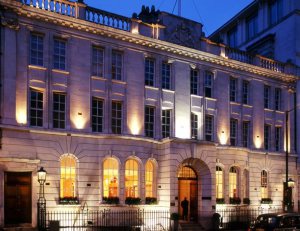
The Viaduct Tavern ~ a Victorian Gin Palace

Tags

, , , ,

viaduct tavern signThe Viaduct Tavern in central London has an interesting history for a variety of reasons.  It is a great example of Victorian “Gin Palace” design, a tribute to an architectural first (the Holborn Viaduct), and has links to the old Newgate Prison.  For all of these reasons it is worth a visit.

viaduct tavern exterior 1

Gin Palaces:  In the 18th Century gin gained in popularity because of its claimed medicinal benefits, in addition to being alcohol!  Small ‘dram shops’ opened up throughout London selling gin either to take home or drink standing at a counter.  Many of these small shops were originally chemists.  As popularity grew and these ‘dram shops’ became larger many also became licensed to sell wine and beer.  By the 1820s-1830s some of these establishments became known as “Gin Palaces” due to their ornate fittings, gas lighting and elaborate décor.  While none of the truly original gin palaces survive, the term lives on with the highly ornate and decorated pubs that were built in the latter half of the 19th Century.  One such pub is the Viaduct Tavern, which is clearly an authentic survivor of the Victorian Gin Palace style.  Gin Palaces have influenced all pubs in that the bar is a relic of the counters installed in the dram shops, and the ubiquitous mirrors and etched glass panels remain from the Victorian design aesthetic.

The Holborn Viaduct

The Holborn Viaduct:  The pub’s name celebrated the opening of the Holborn Viaduct – as the pub essentially lies at the east entrance to this section of roadway.  Construction of this viaduct- essentially a flyover and the first ever in central London – began in 1863 and was completed in 1869, the year the pub opened. It was considered a major architectural accomplishment (it is still there today) and was opened by Queen Victoria.  It replaced the Holborn Bridge that spanned the River Fleet valley (though the Fleet had long been taken underground).

Newgate gallows

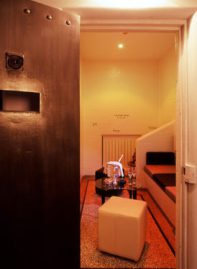
Newgate Prison:  There have been numerous claims over the years that in the cellar of the Viaduct Tavern are five old prison cells.  This is debatable and they may have been modified to look this way, or may just be old storage rooms, but the pub’s connection to Newgate Prison is accurate.  When it was built, Newgate Prison and a small Court were across the street.  The prison was completely demolished in 1902 making way for the ‘Old Bailey’.  It is also likely that the land the pub stands on was the original site of the “Giltspur Compter” (a debtors’ prison), which operated from 1791 to 1853.  Today the pub doesn’t make the claim that the cellars were once cells part of Newgate, preferring a more cautious assertion that they were part of the Giltspur Comptor, though it too had been completely demolished before the pub was built in 1869.

Hangings were a public spectacle in the street until 1868, the year before the pub opened. The condemned would be led along Dead Man’s Walk, a caged walkway between Newgate Prison and the Court.  It is claimed that many were buried under the walk itself.  The small water feature / fountain across the street purportedly marks the place where executions of prisoners occurred.   Leading some to claim the pub is haunted by spirits in the area.

Interior picture source: http://viaducttavern.co.uk/

Interior picture source: http://viaducttavern.co.uk/

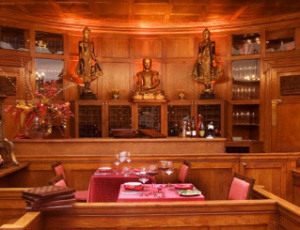
The Pub Today:  The inside of the pub still has a wonderful décor recalling the Gin Palace style. It also still has a “toll booth” where the landlord would have sold tokens for beer, keeping the money handling out of the hands of the bar staff – a unique feature.  The Viaduct Tavern is closed Sat / Sun.  Open Mon-Fri 8:30am – 11pm.  It is a Fuller’s owned pub but they do serve some real ale.  Given its history as a Gin Palace they pride themselves on a wide range of gin choices.  Meals are served including Smithfield sourced meat.

See http://viaducttavern.co.uk/ for more information.

Located:  126 Newgate Street, EC1A 7AA

Closest Tube:  St. Paul’s

Three Mills Island & House Mill: the world’s largest tidal mill.

Tags

, , , , ,

Three_Mills_IslandLocated just south of the Olympic Park is Three Mills Island – home to the largest tidal mill in the world and also home to London’s largest film studio.  The island is a conservation area bordering the River Lea offering several sites worth visiting.  While the studios cannot be toured, the island, tidal mill, visitor centre and adjacent park can all be visited.  The architecture and location are unique – with cobblestone streets, oast house architecture, a clock tower and old brick buildings, one feels transported back in time to a place far away from East London.
Clock Tower 3 Mills

History: This area has been home to mills since Saxon times.  In the Domesday Book there were 8 tidal mills on the River Lea.  Five mill areas were recorded in the Lea tributaries: Pudding Mill, City Mill, Waterworks Mill, Abbey Mill and Three Mills. At Three Mills the mills were built on a man-made island to make the most use of the ebb tide. By the late sixteenth century the area of Three Mills was still known to have two producing mills – grinding corn and making gunpowder.  A third mill was reestablished later.

House Mill interior

While water mills were generally powered by the downstream flow of water, the mills located here took advantage of the tidal flow up the Thames Estuary and Bow Creek.  High tide water was essentially trapped behind a sluice and then released at a controlled rate to drive the mill wheel.  In medieval times historians estimated the mills here probably operated for 3-4 hours per tide.  By the early 20th Century, advances in engineering allowed the mills to work for up to 8 hours per tide.  Grain, delivered by barge or cart, was ground here for various uses.  Prior to 1820 some of the milled grain went to the adjacent distillery for alcohol production.  It was then stored in a large bonded warehouse on adjacent land before being transported elsewhere to be made into gin.  After 1820 it became illegal for alcohol to be made on the same premises as the mill.  In 1872 the mill was purchased by a Gin distiller from Clerkenwell, where one assumes the alcohol was turned into gin.

Three Mills warehouse

The Buildings:  The three mills here were House Mill, the Clock Mill, and a Windmill. The first two still survive. House Mill, is Grade I listed, and is the only structure than contains it milling components.  Originally built in 1776, it was rebuilt after a fire in 1802.  It continued in operation until 1941.  Saved from demolition in the 1970s, restoration began in 1989.  The project still calls for the restoration of all four water wheels and the internal machinery. The hope is that electricity can be generated and put back into the grid.  Footage of the restoration project and an insight into the workings of the Mill can be seen here: http://housemill.org.uk/  The Grade II listed Clock Tower was built in 1817 and was in use as a mill up until 1952.  The Windmill was here until approximately 1840, but has since been lost.  There is also a Customs House and a reconstructed Miller’s House on the site in addition to the film studio buildings.

House Mill:  Open every Sunday from May-Oct from 11-4pm, and on periodic other Sundays throughout the year.  All tours through the mill are guided, last just under an hour and start as demand warrants.  Cost is £3.00 (concessions £1.50, children free).

The Miller’s House: Next door to the House Mill containing a visitor information and education centre.  Start here for tours.

The Miller’s Cafe: Open Mon-Fri 10-3 and when the House Mill is open for tours.

3 Mills Studio

3 Mills Studios:  Located just north of the Customs House and Clock Mill is this gated studio complex.  While not open to the public, the studio houses almost a dozen sound stages, a screening room, a prison set, period building sets, and production facilities known to be commonly used by Danny Boyle.

Located at:  The Miller’s House, Three Mill Lane, Bromley-by-Bow, E3 3DU

Closest tube:  Bromley-by-Bow

Source: Housemill.org.uk

Source: Housemill.org.uk

Battersea Park ~ an historic football site & a great alternative to Hyde Park

Tags

, , , , ,

2013_02_UK_Battersea (3)Located across the Thames from Chelsea, Battersea Park is a true urban oasis that is far less crowded and worn out than Hyde Park.  It still seems to have a ‘locals’ feel to it and at 200 acres in size it has a lot to offer.  Because there is no tube station nearby and because most tourist maps of London handed out at hotels don’t show it (most cut off the bottom of the map at Chelsea), very few tourists come here compared to London’s other large parks.  That said, it is one of my favourite open spaces in London.

2013_02_UK_Battersea (4)

History:  In the early 19th century Battersea fields, a reclaimed marshy area off the Thames, was a well known duelling spot.  In 1846 an Act was passed to buy the land (then used from growing vegetables) to make a Royal Park.  The 200 acres park opened in 1858 and benefited from the newly built Victoria Bridge (now Chelsea Bridge) which allowed easier access for visitors.

2013_02_UK_Battersea (2)

Football:  Battersea Park hosted the first ever football game played under F.A. rules on 9-Jan-1864.  The match was between two teams of the best footballers in their day – one organized by the F.A.’s Secretary, the other by its President.  Since next January will mark the 150th anniversary of football, and 2014 is a World Cup year, a reenactment match is planned for that date and the ball from the game will begin a global journey to Brazil, in the same way that the Olympic torch begins in Greece. See this website to learn more about the ‘Ball’ and its planned journey: http://spiritoffootball.com/the-ball/the-journey/

Also of note is that Wanderers F.C., the winners of the first ever FA Cup in 1872, played at Battersea Park.

2013_02_UK_Battersea (7)

Festival Gardens & Fun Fair:  In 1951 part of the park was converted to a ‘pleasure garden’ as part of the Festival of Britain.  Also a fun fair with a large roller-coaster and other amusements opened in the park.  A personal connection for me is that my mother and father both worked at this fair during the Festival of Britain while they were dating and in their early 20s.  Due to accidents at the fun fair it finally closed in the early 1970s.  Remnants of the pleasure park as still there.

2013_02_UK_Battersea (8)

The Park Today:  With a boating lake, outdoor cafe, open spaces, walking trails, an art museum (Pump House Gallery), sports fields, tennis courts, a peace pagoda and various memorials, there is plenty to see and visit.  The park is officially open from 8am to dusk, though the park is often open much earlier in reality.  For more information on events, special festivals etc… visit:  http://www.batterseapark.org/

Closest Transit:  Closest tube: Sloane Square, then a 137 or 452 bus, or walk (less than a mile).  Closest rail: Battersea Park Station.  Buses: any of these go by the park: 19, 44, 49, 137, 156, 239, 319, 344, 345, 452

Ragged School Museum ~ a free education for London’s Victorian poor.

Tags

Vintage photo Barnardo SchoolAs recently as the late 1800s a free education was not an option for many children.  While a few free schools were founded in the early 1800s, it was not until the the mid-1800s that a focused effort by many charitable groups led to an expansion of free schools for the poor.  The London City Mission coined the term ‘Ragged School’ to describe these free schools for the destitute and in 1844 the ‘Ragged School Union’ was founded in London to further the expansion and organization of these schools.

Ragged School exteriorThe Ragged School Museum:  Located in the East End in what was once London’s biggest Ragged School, this museum provides insight into this piece of societal history with a collection of hands-on exhibits, a recreated Victorian classroom and kitchen, and scheduled presentations.  The classroom houses period correct desks and teaching related items – including dunce hats!

Dr BarnardoHistory:  Moving from Dublin to London in 1866 with the intent to train as a Doctor, Thomas Barnardo was moved by the poverty and helplessness of London’s East End children.  Motivated to improve the opportunities for these children, he opened a ‘Ragged School’ in 1867.   In 1877 he opened two schools on Copperfield Road – one for boys and one for girls.  Providing education and free meals, they stayed open until 1908.  At this time there were now enough government funded schools to serve the needs of the community and his ragged school closed.  Located in old warehouses on Regent’s Canal, these building reverted to various industrial uses until they were saved from demolition in the 1980s.  Taken over by a charitable trust, the Ragged School museum opened in 1990 in their original buildings.

Ragged School classroomHours / Scheduled Events:  Open Weds/Thurs from 10-5 for general visits. There is an open house on the 1st Sunday each month, from 2-5pm where a recreated Victorian class session is held at 2:15pm and 3:30pm.  Led by an actor in full Victorian dress a seat in class (limited to 34) to these entertaining experiences can be booked in advance (donation only).  There is also a canal-side cafe and a museum shop.  

Located at:   46-50 Copperfield Rd, E3 4RR

Closest Tube:  Mile End (walk through Mile End park)

St. John’s Smith Square ~ from the Ashes of the Blitz rose a World Class Music Venue

Tags

, , , , , ,

St Johns InteriorLocated just south of Westminster Abbey and the Houses of Parliament is Smith Square.  In the centre of this square is St. John’s church, a wonderful Grade I listed building that was all but destroyed during the Blitz.  Sold as a ruin, it was restored and is now one of London’s best venues for classical and choral music.  With wonderful acoustics, a wide variety of events are held here throughout the year – from instrumental recitals, to choral works, to full symphony orchestras.  In addition, its location provides that wonderful feeling of being hidden while still in the heart of Westminster.

St_Johns_Vintage_image

History:  Built from 1713 on, and finished in 1728, by Thomas Archer with a design that leads to the church being often referred to as ‘Queen Anne’s Footstool’ (based upon a story that its design was influenced by Queen Anne after she kicked over her footstool and told Archer to build it to look like that).  Even Charles Dicken’s wrote in Our Mutual Friend that it looked like a “petrified monster… on its back with its legs in the air”.  That said, it is a great example of Baroque architecture even with its four corner towers.  As St. John the Evangelist it served the surrounding parish until it was hit with an incendiary bomb in 1941.  Suffering significant damage it lay as a ruin for 20 years.

St_Johns_Smith_Square_Exterior

Today:  A group was formed in the 1960s to raise funds to restore the church.  By 1969 the church had been rebuilt to Archer’s original design but now for use as a concert hall.  With excellent acoustics it serves this purpose well.  St. John’s Smith Square operates a concert schedule from September until late July most years with a small summer break. Its Patron is Camilla, Duchess of Cornwall.

Concert by Sherborne School (sherborn.org)

Concert by Sherborne School (sherborne.org)

Concerts:  Tickets to concerts are available either in-person at their box office – open M-F 10-5, or through their website.  Their concert schedule can also be found on their website at http://www.sjss.org.uk/concert-schedule

st_Johns_Crypt_Cafe

Cafe / Restaurant:  There is a Café & Restaurant located in the crypt, open M-F 8-5, and it opens 90 minutes prior to any concert.  During concerts, pre-event, interval and post-event drinks and snacks are available.

Located at:  St John’s, Smith Square, London, SW1P 3HA

Closest tube:  Westminster

Follow

Get every new post delivered to your Inbox.

Join 4,872 other followers